

Epinephrine or antihistamine first? What the evidence says
Epinephrine first. A 2026 review found antihistamines and steroids show up in anaphylaxis treatment worldwide, sometimes more often than epinephrine, and studies rarely record the order.
By ResQBand team · Fact-checked by Western Allergy Services Ltd., Canadian allergy company since 1972
· Updated October 19, 2026 · 4 min read
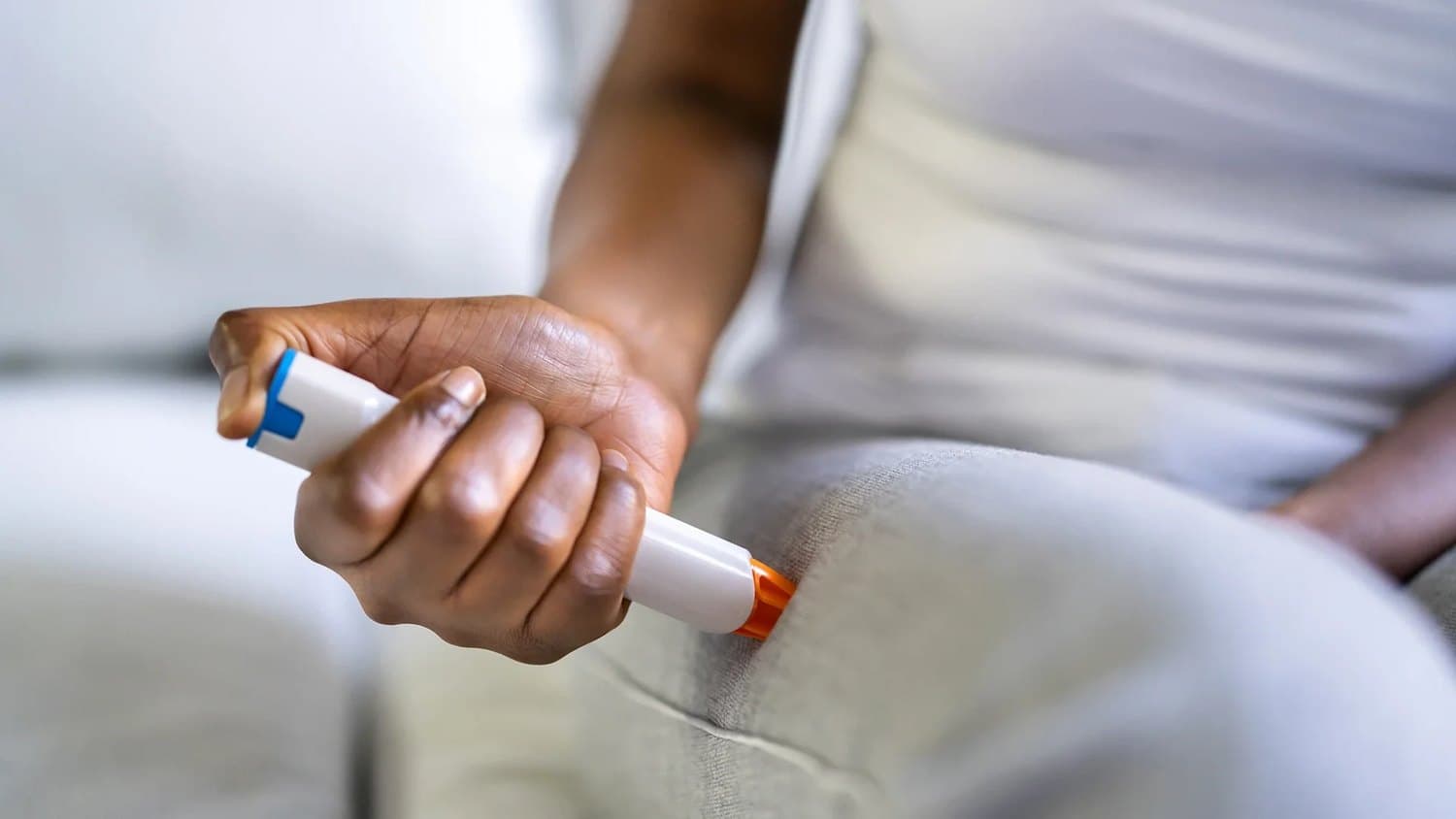
When a reaction starts, the antihistamine is often closer than the epinephrine, and it feels like the gentler first step. So: epinephrine or antihistamine first? In anaphylaxis, epinephrine comes first. The World Allergy Organization's guidance says intramuscular epinephrine is the first-line treatment in anaphylaxis, and Food Allergy Canada says an auto-injector should be used before asthma inhalers, antihistamines or any other medication. Yet a 2026 review of studies from around the world found antihistamines and steroids in the treatment records of almost every study, and in some groups of patients they were given more often than epinephrine.
Epinephrine or antihistamine first? The answer
Epinephrine. Food Allergy Canada describes it as the only medication that can reverse the symptoms of anaphylaxis. Antihistamines such as Benadryl (diphenhydramine) don't reverse anaphylaxis and shouldn't be used instead of epinephrine. Benadryl works more slowly and can cause drowsiness, and antihistamines mostly help with itching and hives.
If an antihistamine is used at all, it comes after epinephrine, for comfort.
What about an asthma inhaler?
People with asthma often reach for their reliever inhaler first when breathing gets tight, and in anaphylaxis that costs time. Food Allergy Canada's guidance is the same as for antihistamines: asthma medications haven't been shown to stop anaphylaxis and shouldn't be used instead of epinephrine. The order is: epinephrine first, then call 911, and only then the inhaler as an add-on, if your plan says so.
What a 2026 review found about anaphylaxis treatment worldwide
A scoping review by Ayel Luis R. Batac and colleagues, presented under the London School of Hygiene & Tropical Medicine's name and with Canadian allergists Elissa Abrams and Philippe Bégin among its authors, mapped how anaphylaxis is treated around the world. It was presented as a poster at the Canadian Society of Allergy and Clinical Immunology (CSACI) meeting in Toronto in October 2026. The team screened 2,284 records and included 26 studies with treatment data from hospitals, emergency departments and ambulance care.
- Antihistamines and corticosteroids (steroids) were each reported in 22 of the 26 studies, and in several groups of patients they were given more often than epinephrine.
- The order of treatment was almost never recorded: only 1 study reported which medication came first.
- Timing was rarely recorded: 4 studies reported the exact time to epinephrine, and 15 reported how it was given.
- Other or mixed ways of giving epinephrine, not the recommended injection into the muscle alone, were reported in 9 studies.
The authors' conclusion: treatment varies widely, and inconsistent reporting makes it hard to judge whether people get the care guidelines recommend. More frequent antihistamine use doesn't prove antihistamines were given first, but it shows how often they're part of the picture.
The same pattern in Canada
Canadian data show the habit close to home. In a study of 483 food-induced anaphylaxis cases at nine Canadian emergency departments, 53% of patients were given antihistamines, while only 41% of those who had an auto-injector with them used it before reaching hospital (Gabrielli et al., 2018). And a national registry of anaphylaxis deaths presented in 2026 found that more than a quarter of the people who died never received epinephrine. Read what that registry found.
Why giving epinephrine early matters
Timing makes a difference. In a US children's emergency department study of 384 children with food-induced anaphylaxis, 17% of those given epinephrine before arriving were admitted to hospital, compared with 43% of those who first got it at the hospital (Fleming et al., 2015). Reaching for the antihistamine first spends minutes that epinephrine could be using.
Why people reach for the antihistamine first
- It feels safer. Many people are nervous about an injection, or unsure the reaction is "bad enough".
- It's closer. Antihistamines live in purses, desks and kitchen cabinets.
- Old advice. Some families were once told to try an antihistamine or an inhaler first. Food Allergy Canada calls that a myth.
- Deciding alone is hard, especially with a scared child in front of you.
What to do instead
- Follow your anaphylaxis emergency plan. It says which signs mean "give epinephrine now".
- Give epinephrine first, then call 911. Food Allergy Canada's advice is not to delay.
- Use an antihistamine only afterwards, if at all, for itching or hives.
- Keep the epinephrine closer than the antihistamine. Two doses, in date, wherever you go. See how many epinephrine doses you should carry.
Where ResQBand fits
In the moment, a helper needs something to tell them what to do. The ResQBand Tap Card is printed "Use immediately" and "Call 911". Tapped with most phones, it opens a page that says to use the epinephrine now and call 911, with the maker's step-by-step instructions one press away. The helper needs no app. See what a helper sees.
The short version
In anaphylaxis, epinephrine comes first, every time. Antihistamines don't reverse it. Give epinephrine, call 911, and use an antihistamine afterwards only for itching if you choose to.
This article is general information, not medical advice. Follow your own emergency plan. In an emergency, call 911.
Sources
- World Allergy Organization anaphylaxis guidance 2020 (Cardona V, et al.), World Allergy Organization Journal (2020)
- Mythbuster: Benadryl can be used instead of epinephrine to treat anaphylaxis, Food Allergy Canada (2026)
- Mythbuster: can antihistamines and asthma medications be used instead of epinephrine to treat anaphylaxis?, Food Allergy Canada (2026)
- Poster: Beyond epinephrine underuse: a scoping review of global variation in anaphylaxis treatment and guideline-concordant care (Batac ALR, Wong-Pack A, et al.), 81st CSACI Annual Scientific Meeting, Toronto (2026)
- 81st Annual CSACI Scientific Meeting, Toronto, October 15 to 18, 2026, Canadian Society of Allergy and Clinical Immunology (2026)
- Epinephrine underused during anaphylaxis outside of hospital (Gabrielli et al., JACI: In Practice), McGill University Health Centre (2018)
- Early epinephrine treatment in anaphylaxis associated with reduced risk of hospitalization (Fleming et al., JACI: In Practice), HCPLive (2015)
General information, not medical advice. Always follow the instructions that come with your medication and the advice of your pharmacist or doctor. In an emergency, call 911. Medical disclaimer · How we check our articles