

How to explain neffy to a babysitter or teacher
A five-minute walk-through for sitters, teachers and grandparents, the three mistakes to warn them about, and what to leave behind when you go.
By ResQBand team · Fact-checked by Western Allergy Services Ltd., Canadian allergy company since 1972
· Updated October 17, 2026 · 4 min read
If your child carries neffy, the adult with them when a reaction starts may never have held one. Knowing how to explain neffy to a babysitter, teacher or grandparent takes about five minutes, and those minutes matter. neffy is simple to use, but it looks like an everyday nasal spray, and the habits people bring from those sprays are the same habits that waste a dose.
neffy is an epinephrine nasal spray for the emergency treatment of anaphylaxis. In Canada it is approved for adults and children who weigh 30 kg (66 lb) or more. Each device holds one dose. Here is what to cover, in the order you would show it.
The three neffy mistakes to warn every helper about
These come straight from the maker's instructions. Say them out loud, every time you brief someone new.
1. Don't test spray it
Most people pump a nasal spray into the air before using it. With neffy, that pump is the dose. The maker's instructions say not to test or prime it, because each device sprays once. Tell your helper: the first press goes in the nose, never into the air.
2. Straight in, pointed toward the forehead
The nozzle goes into one nostril as far as their fingers allow, kept straight and pointed toward the forehead. The instructions say not to angle it toward the wall between the nostrils or toward the outer wall of the nose.
3. Don't tell them to sniff
Adults say "sniff" out of habit when they give a child a nasal spray. The neffy instructions say to try to avoid sniffing during and after the dose. If someone sniffs by accident, watch their symptoms for at least 5 minutes, and if symptoms continue or get worse, give a second dose in the same nostril if possible.
How to explain neffy to a babysitter in five minutes
- Show them where it lives. Which bag, which pocket, and that there are two devices. The maker advises carrying at least two in case a second dose is needed.
- Name the signs. Go through your child's anaphylaxis emergency plan: which symptoms mean "use it now". Use the plan your allergist signed, not a list from the internet.
- Walk through the grip. Thumb on the bottom of the plunger, a finger on each side of the nozzle. If your allergist or pharmacy has a trainer, let them practise with it. Never practise with a real device.
- Say the three warnings. No test spray. Straight in, toward the forehead. No sniffing.
- Then call 911. After the dose, call 911 and say epinephrine was given, and stay with your child. The maker's instructions say a second dose can be given with a new neffy in the same nostril, starting 5 minutes after the first, if symptoms don't improve or get worse.
- Ask them to show you. Have them say it back in their own words. If they can explain it to you calmly, they have a much better chance of doing it under stress.
What to leave behind when you go
A good briefing fades. A babysitter on their third night with your kids won't remember every step, and a substitute teacher may never get the briefing at all. Leave something that does the remembering for them:
- Your child's signed emergency plan, in the bag with the neffy, not only on the fridge. Food Allergy Canada's Anaphylaxis Emergency Plan is free to fill in.
- The maker's instructions. They come in the box, and they are online at neffy.com.
- A fast way to reach you. Your number on paper helps, but in a reaction a helper's hands are busy, so the fewer steps the better.
How the black ResQBand Tap Card helps a helper
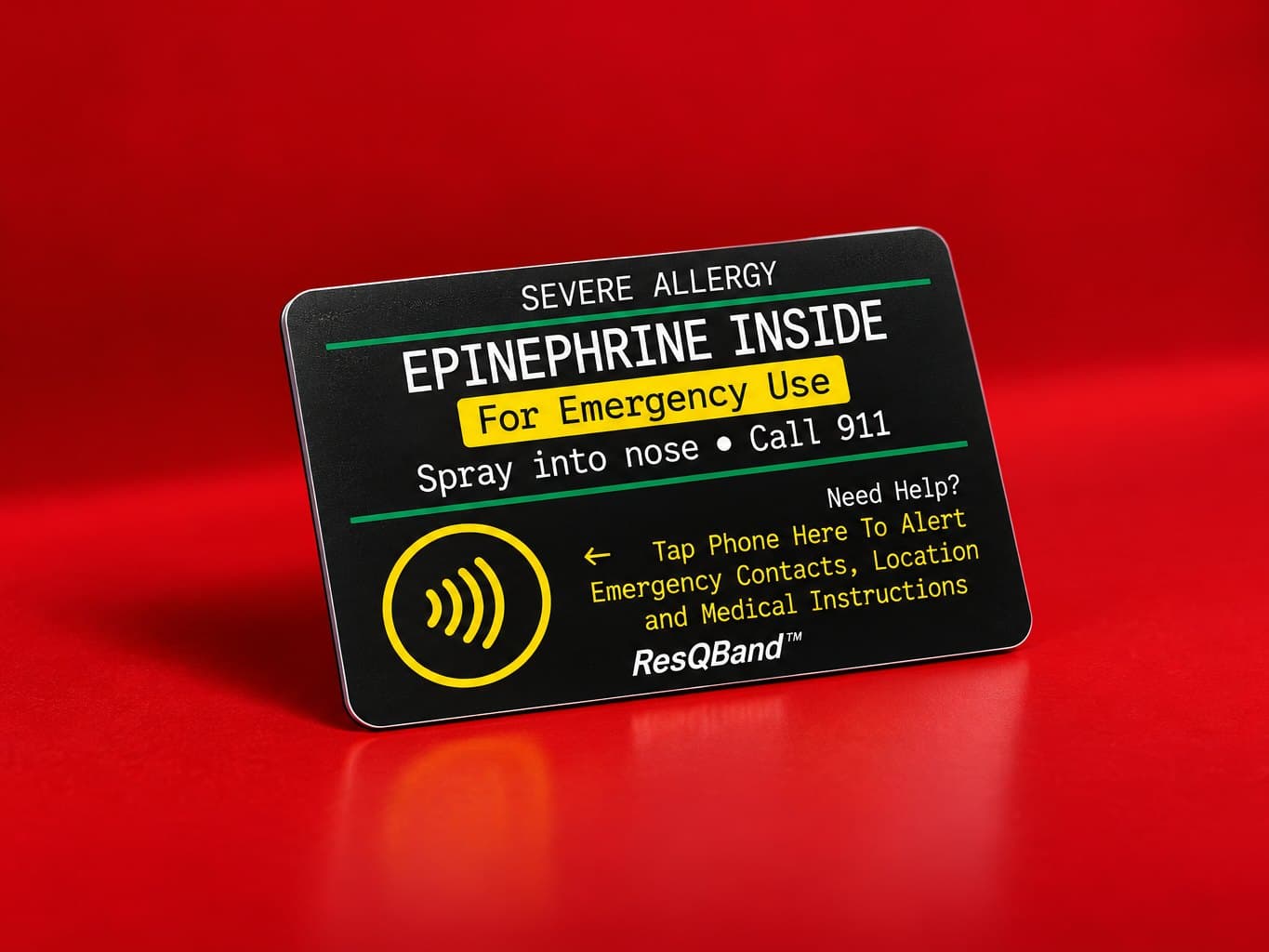
We made the black ResQBand Tap Card for families who carry neffy. It is printed "Spray into nose" and "Call 911", so it still works with no phone at all. When the helper taps it with their phone, most phones open your child's emergency page (newer iPhones, and Android phones with tap-to-pay turned on). The helper needs no app, no login and no camera.
The page tells them to use the nasal spray now, then call 911, and opens the maker's step-by-step neffy instructions with one press. It shows your child's allergies, where the epinephrine is, and a Call 911 button with what to tell the dispatcher. A separate button lets the helper alert you and your other emergency contact by text, with their location when their phone allows it. Nothing is sent until they press that button, and only contacts who opted in receive it. Alerts are free once the card is registered, with no subscription.
If they tap "Epinephrine given", the page notes the time for 911 and the paramedics, texts it to your contacts and counts five minutes, then points to the maker's instructions on a second dose. You can try the demo of what a helper sees.
The card fits the window of the ResQBand Wrist Band, beside the nasal spray, and taps right through it.
The short version
Show them where it is. Say the three warnings: no test spray, straight in toward the forehead, no sniffing. Use it, then call 911. Then leave something behind that remembers all of it for them.
This article summarises the maker's published instructions. Always follow the leaflet in your own package and your child's emergency plan. In an emergency, call 911.
Sources
- How to use neffy, ARS Pharmaceuticals (neffy.com) (2026)
- neffy product monograph (Canada), ALK-Abelló / Health Canada (2026)
- neffy frequently asked questions, ALK Canada (neffy.ca) (2026)
- Anaphylaxis Emergency Plan (form), Food Allergy Canada (2022)
General information, not medical advice. Always follow the instructions that come with your medication and the advice of your pharmacist or doctor. In an emergency, call 911. Medical disclaimer · How we check our articles