

Your anaphylaxis emergency plan: get it where it's needed
Keep filing the paper plan. Then make sure the people who are actually with your child can see it: sitters, coaches, chaperones and grandparents.
By ResQBand team · Fact-checked by Western Allergy Services Ltd., Canadian allergy company since 1972
· Updated October 16, 2026 · 3 min read
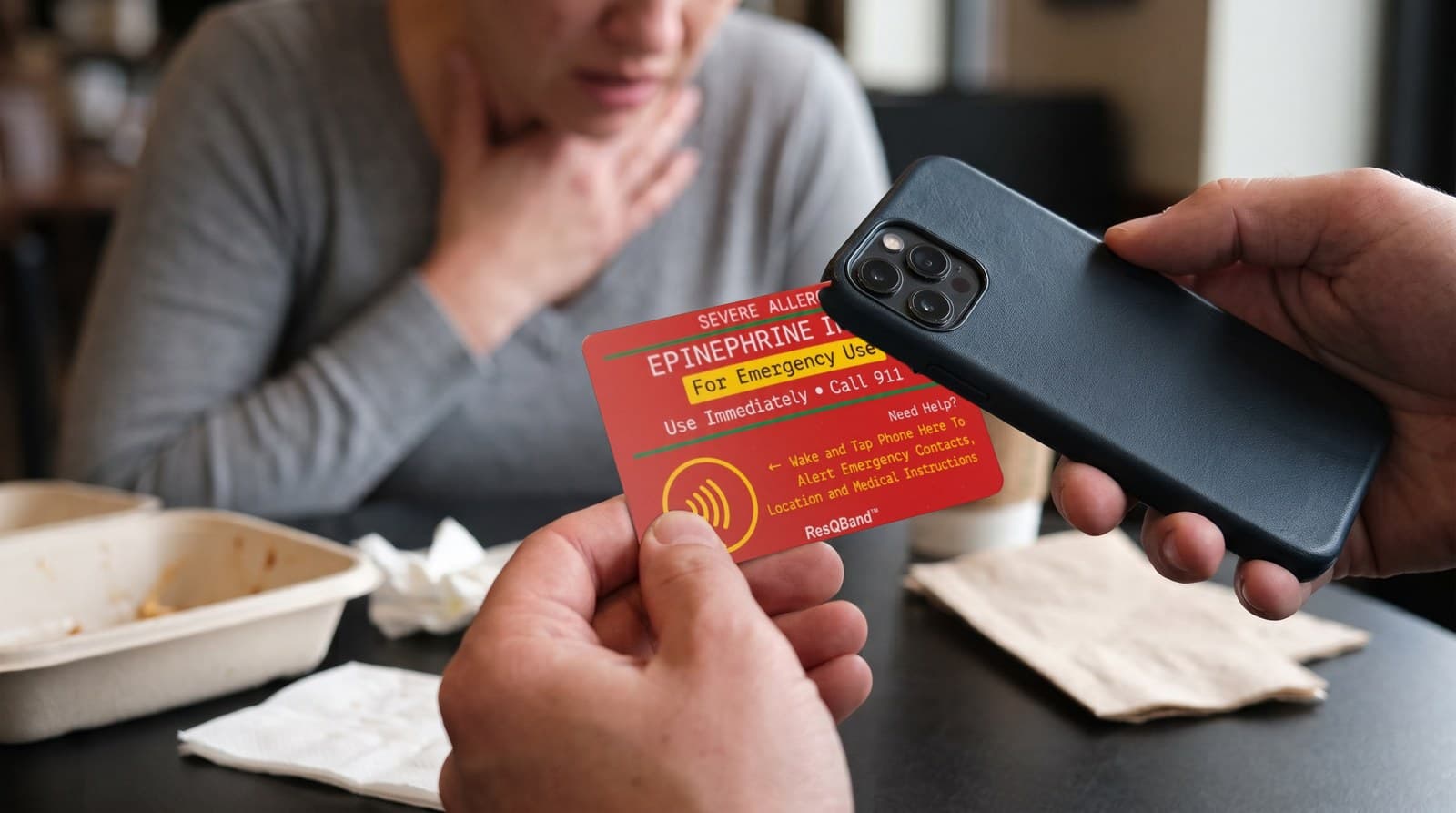
Every school year starts the same way for allergy parents: print the anaphylaxis emergency plan, get it signed, hand it in at the office. Keep doing that. Schools need it, and in Ontario, Sabrina's Law requires principals to have an individual plan for every student at risk. But a plan only helps if the person beside your child can see it when a reaction starts, and that person is often not in the office.
What an anaphylaxis emergency plan includes
In Canada, most families use Food Allergy Canada's Anaphylaxis Emergency Plan, a free form you can fill in on a computer or print. It covers the person's allergies, the signs and symptoms to watch for, the emergency steps, and a photo. In the US, the FARE Food Allergy and Anaphylaxis Emergency Care Plan does the same job and is signed by a physician.
Whichever you use:
- Have your allergist or doctor review and sign it.
- Name the device your child carries, and its strength.
- List two emergency contacts who will answer.
- Add a clear, recent photo.
- Review it with your child, in words that fit their age.
Four places a paper plan doesn't reach
- Field trips and substitutes. A parent chaperone with six kids at a science centre doesn't have the office binder, and a substitute teacher may not know it exists.
- The babysitter at the park. A plan taped inside a kitchen cupboard does nothing a block away.
- Mid-year changes. When your allergist switches the device or the strength, every paper copy in a grandparent's drawer or a sports bag is suddenly out of date.
- Weekends and activities. Birthday parties, practices, sleepovers: nobody asks for a copy, so nobody has one.
Keep the paper plan, and add a live copy
The fix isn't replacing the paper. It's making sure there is always a current copy with your child, wherever they are.
A ResQBand account lets you make a read-only share link for the school nurse, a camp, a coach or a sitter. It shows your child's allergies, their medication, any health details you choose to add, and what to do in an emergency. It opens in a phone's web browser with no app and no login, stays up to date when you change something, prints cleanly, and can be turned off any time, for example when camp ends.
The ResQBand Tap Card carries the same information on your child. Tapped with most phones, it opens their emergency page: use the epinephrine now, then call 911, with the maker's instructions one press away. The page shows their allergies, where the epinephrine is, and a "For paramedics" screen with any extra details you added. A separate button lets the helper alert you and your other emergency contact by text, with their location when their phone allows it. Nothing is sent until they press it, and only contacts who opted in receive it.
How to hand your plan to a sitter or coach
- Fill in and sign your official plan, and keep a copy in the epinephrine bag.
- Make a share link from your ResQBand account and text it to the sitter, coach or host parent.
- Spend two minutes on the device: where it is, the signs, use it, call 911. Our guide to explaining neffy to a babysitter or teacher has a five-minute version.
- Show them the card on the bag or wrist, and that tapping it brings up the same plan.
- Turn the link off when you no longer need it shared.
Keep it current
Update the plan whenever your child's weight, device, strength or contacts change. If you register a Tap Card and enter the epinephrine's expiry date, we email you 30 days and 7 days before it expires, and on the day.
The short version
File the paper plan, signed, every year. Then make sure a current copy travels with your child: in the bag, on a card a helper can tap, and in a link you can text to whoever is in charge today. See how free alerts work, or try the demo of what a helper sees.
An emergency plan is written with your doctor. This article explains how to share it, not what should be in your child's. In an emergency, call 911.
Sources
- Anaphylaxis Emergency Plan (form), Food Allergy Canada (2022)
- Food Allergy & Anaphylaxis Emergency Care Plan, FARE (2026)
- Sabrina's Law, 2005, S.O. 2005, c. 7, Government of Ontario (2005)
- Anaphylaxis law and policies by province and territory, Food Allergy Canada (2026)
General information, not medical advice. Always follow the instructions that come with your medication and the advice of your pharmacist or doctor. In an emergency, call 911. Medical disclaimer · How we check our articles