New food allergy and anaphylaxis research from PubMed, explained in plain language, plus the clinical trials recruiting in Canada and the US. Updated every day.
Background: Tropomyosin (Pen a 1)-specific IgE (sIgE) is a proposed diagnostic marker for shrimp allergy; however, its superiority over crude shrimp sIgE is unclear.
ResearchTesting and diagnosis
Study · International archives of allergy and immunology · Oct 8
Background Nonsteroidal anti-inflammatory drugs (NSAIDs) are frequently used in children, but NSAID hypersensitivity (NSAID-H) presents a heterogeneous clinical profile.
ResearchTesting and diagnosisAnxiety and mental health
Study · Pediatric allergy and immunology : official publication of the European Society of Pediatric Allergy and Immunology · Oct 8
Purpose: To avoid the complete elimination of cow's milk (CM) from the diet, we introduced a very-low-dose (VLD) oral food challenge (OFC) as part of an OFC-based stepwise ingestion protocol in patients with severe CM allergy in 2019, when the OFC protocol…
ResearchTesting and diagnosis
Study · Allergy, asthma & immunology research · Oct 8
Purpose: Iodinated contrast media (ICM) are widely used in diagnostic imaging, but may trigger immediate hypersensitivity reactions, including anaphylaxis.
ResearchTesting and diagnosis
Observational study · Pediatric allergy and immunology : official publication of the European Society of Pediatric Allergy and Immunology · Oct 8
Background: Research is limited regarding the intersection between Immunoglobulin-E (IgE)-mediated food allergies and paediatric feeding Disorder (PFD). The impact on caregivers managing a child with both conditions also remains poorly understood.
ResearchTesting and diagnosisAnxiety and mental health
Study · International archives of allergy and immunology · Oct 7
Introduction: Sensitization to different allergen components is associated with distinct clinical characteristics including disease phenotypes and severity.
ResearchTesting and diagnosis
Study · International archives of allergy and immunology · Oct 7
Background: The timing of tolerance acquisition in childhood IgE-mediated food allergy is clinically important but has been less well studied than persistence as a binary outcome.
ResearchTesting and diagnosis
Review · The journal of allergy and clinical immunology. In practice · Oct 7
The integration of research discoveries into routine clinical care is often slow and resource-intensive, particularly in allergy and immunology, where advances in biologics, immunotherapy, precision diagnostics, and guideline-driven management continue to…
ResearchTreatmentsTesting and diagnosis
Study · Clinical and experimental allergy : journal of the British Society for Allergy and Clinical Immunology · Oct 7
Background: Increased basal serum tryptase level (BST) is associated with anaphylaxis. In the absence of clonal mast cell disease and hereditary α-tryptasemia (HαT), the contribution of the tryptase locus variation to BST and anaphylaxis remains undefined.
Research
Study · Immunity, inflammation and disease · Oct 6
Introduction: Infants with atopic dermatitis (AD) are more likely to experience food allergies, and AD children experience asymptomatic food sensitivity.
ResearchEarly introduction
Review · Annals of allergy, asthma & immunology : official publication of the American College of Allergy, Asthma, & Immunology · Oct 6
Perioperative anaphylaxis rare, approximately 1:10,000 anesthetic events in adults and 1:35,000 in children; but allergists/immunologists in a consultative practice are likely to encounter this problem more than once during their career.
Research
Study · Pediatric allergy and immunology : official publication of the European Society of Pediatric Allergy and Immunology · Oct 6
Background: Patients with eosinophilic oesophagitis (EoE) can present with differing disease characteristics, treatment resistance, and associated type 2 inflammatory comorbidities.
Selective plasma exchange (SePE) may reduce adverse events associated with fresh frozen plasma (FFP) use during pretransplant desensitization for ABO-incompatible kidney transplantation.
ResearchOral immunotherapy
Study · Pediatric allergy and immunology : official publication of the European Society of Pediatric Allergy and Immunology · Oct 5
Objective: To determine whether the timing and continuity of neonatal cow's milk formula (CMF) exposure influence the risk of IgE-mediated cow's milk protein allergy (CMPA).
ResearchTesting and diagnosisEarly introduction
Study · Allergology international : official journal of the Japanese Society of Allergology · Oct 5
Background: Palmar hyperlinearity (PH) is a minor diagnostic criterion for atopic dermatitis (AD) proposed by Hanifin and Rajka and is associated with loss-of-function variants in the filaggrin (FLG) gene.
ResearchTesting and diagnosis
Review · European eating disorders review : the journal of the Eating Disorders Association · Oct 4
Background: Avoidant/Restrictive Food Intake Disorder (ARFID) is increasingly recognized as a complex paediatric feeding and eating disorder associated with significant medical and psychiatric burden.
Background: The expansion of dengue vaccination strategies in Brazil, including the introduction of the Butantan dengue vaccine (DV), has reinforced the importance of post-marketing safety surveillance.
1 lineage of severe acute respiratory syndrome coronavirus 2 (SARS-CoV-2). Post-authorization and post-approval safety monitoring is important to ensure ongoing vaccine safety.
ResearchTesting and diagnosisEarly introduction
Study · Pediatric allergy and immunology : official publication of the European Society of Pediatric Allergy and Immunology · Oct 3
Background: Food allergy (FA) may substantially impair quality of life (QoL) in affected children and their families. Reliable and culturally adapted tools are needed to assess this burden.
ResearchAnxiety and mental health
Study · Pediatric allergy and immunology : official publication of the European Society of Pediatric Allergy and Immunology · Oct 2
Background: The natural history of peanut allergy based on oral food challenge (OFC) outcomes has been rarely reported. We investigated the clinical course of peanut allergy up to 12 years of age using OFC results.
ResearchTesting and diagnosis
Study · Pediatric allergy and immunology : official publication of the European Society of Pediatric Allergy and Immunology · Oct 2
Background: The increasing prevalence of food allergy (FA) in industrialized regions cannot be fully explained by traditional hygiene and biodiversity frameworks, suggesting the involvement of new environmental triggers.
ResearchTreatmentsEarly introduction
Review · Current allergy and asthma reports · Oct 1
Purpose of the review: Perioperative hypersensitivity reactions are uncommon but potentially life-threatening complications of anaesthesia and remain a major concern in clinical practice.
Different types of Botulinum neurotoxins (BoNTs) cause human botulism. Among them, type F botulism, caused by genetically diverse BoNT/F subtypes, is rare and may be overlooked despite its clinical importance.
Background and aims: A growing body of evidence links intestinal epithelial cell barrier dysfunction to the development of food allergies. We previously showed that the peanut allergy-susceptible CC027 mouse has increased intestinal permeability.
ResearchAnxiety and mental health
Study · The Journal of allergy and clinical immunology · Sep 30
Purpose of review: Gastrointestinal dysbiosis is implicated in the disruption of immune homeostasis and the pathogenesis of food allergies. Consequently, dietary fibers have gained attention as key molecules modulating microbial balance and immunity.
Background: Musculoskeletal hydatid disease is an uncommon manifestation of Echinococcus granulosus infection, accounting for less than 1% of cases even in endemic regions. Primary skeletal-muscle localization is exceptional.
Objectives: This study examined the relationship between e-healthy nutrition literacy, maternal feeding attitudes, and anxiety levels in mothers of children with food allergies.
ResearchTesting and diagnosisAnxiety and mental health
Review · Clinical and translational allergy · Sep 29
Sesame allergy is associated with severe allergic reactions, low rates of spontaneous resolution, and significant psychosocial burden. Current management relies on strict avoidance and emergency treatment.
ResearchOral immunotherapyTreatments
Study · Florence Nightingale journal of nursing · Sep 29
0 and DeepSeek V3 model-supported nursing care plan for patients with anaphylactic shock. Methods: The type of study is methodological and exploratory research. The research consists of three phases and six steps.
Research
Review · Current allergy and asthma reports · Sep 28
Purpose of review: The landscape of biologic therapeutics has expanded to include therapies such as antibody-drug conjugates (ADCs) and bispecific T-cell engagers.
ResearchOral immunotherapyTreatments
Study · The Journal of allergy and clinical immunology · Sep 28
Background: Microphthalmia-associated transcription factor (MITF) is a master regulator of mast cell (MC) differentiation and effector function and is essential for anaphylaxis (severe allergic reactions).
ResearchTesting and diagnosis
Study · The Journal of allergy and clinical immunology · Sep 28
Gómez-Carballa A, Montoto-Louzao J, Viz-Lasheras S, et al.
Background: Acute food protein-induced enterocolitis syndrome (FPIES) is a potentially life-threatening, non-IgE-mediated food allergy that primarily affects young children.
ResearchTesting and diagnosis
Study · European archives of paediatric dentistry : official journal of the European Academy of Paediatric Dentistry · Sep 28
5-fold increase in incidence in the past two decades. However, disease-modifying therapies remain limited due to incomplete understanding of the underlying metabolic mechanisms.
Madrigal-Burgaleta R, Alvarez-Cuesta E, Brockow K, et al.
Hypersensitivity reactions to intravenous therapies-including antibiotics, chemotherapeutics, biologics, anesthesia agents, and contrast media-pose significant challenges in acute care settings.
Background: Kounis syndrome (KS) is a rare hypersensitivity-associated acute coronary syndrome driven by mast cell activation. Vancomycin-induced KS in the perioperative setting is exceptionally rare.
ResearchEpinephrine
Study · The Journal of allergy and clinical immunology · Sep 26
Biologics have revolutionized the treatment of severe allergic diseases in children that cannot be controlled by conventional treatments. These diseases are commonly driven by dysregulation of immune response, often driven by Type 2 pathways.
ResearchTreatmentsTesting and diagnosis
Study · European annals of allergy and clinical immunology · Sep 25
Background. Food allergy (FA) is a growing public health concern among school-aged children. Schools are high-risk settings for accidental exposures and anaphylaxis, yet staff frequently report insufficient preparedness to manage such emergencies.
In the published version of this article [1], it was identified that a mandatory section of the Supplementary Material and the List of Abbreviations were missing.
Research
Study · European annals of allergy and clinical immunology · Sep 24
Background. Peach allergy is a common cause of food allergy in Mediterranean populations, often linked to pollen sensitization. Longitudinal data on peach and inhalant allergen sensitization remain limited, especially in pediatric cohorts.
Background. Non-specific lipid transfer proteins (nsLTPs) are major plant panallergens in Mediterranean plant-food allergy. In multiplex diagnostics, Pru p 3 reactivity often coexists with pollen-associated nsLTPs, making clinical interpretation difficult.
A woman in her early 60s with stage 3A diffuse large B-cell lymphoma developed anaphylaxis to pegfilgrastim after her first cycle of rituximab, cyclophosphamide, doxorubicin, vincristine and prednisone (R-CHOP) chemotherapy, presenting with syncope, severe…
ResearchTreatmentsEpinephrine
Observational study · Swiss medical weekly · Sep 24
Introduction: Anaphylaxis is a severe and potentially life-threatening allergic reaction, most frequently triggered by food, medication and insect venom.
ResearchTreatmentsEpinephrine
Study · Allergy, asthma, and clinical immunology : official journal of the Canadian Society of Allergy and Clinical Immunology · Sep 24
Background: Studies demonstrate that dupilumab treatment decreases food-specific IgE (sIgE) but this has not been shown to correlate with clinical desensitization.
ResearchOral immunotherapyTreatments
Case report · The Medical journal of Australia · Sep 23
Hydatid cyst-related mortality is rare and diagnostically challenging in forensic practice, particularly when cystic echinococcosis remains clinically unrecognized until death.
ResearchTesting and diagnosis
Trials recruiting in Canada and the US
From ClinicalTrials.gov, refreshed every morning. Each links to its official listing with the study's contacts. Talk to your allergist before joining one.
This is a multisite, randomized, double-blind, controlled cross-over trial with detailed characterization of participants with varying clinical sub-phenotypes of Alpha-gal Syndrome (AGS) who are then evaluated by oral food challenges with alpha-gal Knock Out…
Peanut allergy is the most common cause of fatal and near-fatal food-allergic reactions and egg allergy is among the two most common causes of food-induced anaphylaxis.
The goal of this clinical trial is to determine if a multi-component environmental package (MEP) can prevent food allergies among infants at risk of developing food allergies in early life.
Phase 3 · Ages 6 months to 6 · Sites in 13 US states
This study is researching an experimental drug called dupilumab (called "study drug"). The study is focused on children with active eosinophilic esophagitis (EoE; an inflammatory disease of the esophagus) which impacts feeding and nourishment.
The purpose of this Phase III study is to evaluate the clinical efficacy and safety of remibrutinib in participants with peanut, or cow's milk ("milk", cooked and uncooked) or hen's egg ("egg", cooked and uncooked) immunoglobulin E (IgE)- mediated allergy in…
The proposed study is a proof-of-concept Phase 2, double-blind, randomized placebo-controlled clinical trial evaluating the safety and efficacy of tezepelumab and peanut Oral Immunotherapy (OIT) for the treatment of peanut allergy.
The purpose of this study is to learn about the safety of a new study medicine called PF-08103402 in healthy adults (do not have disease) and or in adults with mild-to-moderate asthma. This is the first time the study medicine is being given to people.
The objective of this trial is to assess the effects of replacing foods high in refined carbohydrates, particularly added sugars, with avocado (isocaloric substitution) on biomarkers of inflammation and insulin sensitivity in adults with elevated hs-CRP and…
Background: Atopic dermatitis (AD), also called eczema, makes skin dry, red, and itchy. People with AD are more likely to get a food allergy than people without AD. But some food allergy tests are not always accurate in people with AD.
The goal of this clinical trial is to evaluate the safety, pharmacokinetics, and effectiveness of MY006, a therapy designed to prevent severe or potentially life-threatening allergic reactions caused by accidental peanut intake.
Phase 1 · Ages 12 and up · Sites in British Columbia
The goal of this exploratory study is to evaluate the effects of inhaled epinephrine in subjects, who may not be eligible for the GHL-101 trial, and who are experiencing systemic allergic reaction (SAR) that occur following allergy testing, subcutaneous…
Phase 2 · Ages 12 to 55 · Sites in British Columbia, Ontario, Quebec, and in 16 US states
Phase 2b Study of RPT904 as Monotherapy in Participants With IgE-Mediated Food Allergy: This is a Phase 2b randomized, double-blind, placebo-controlled clinical trial evaluating RPT904, a next-generation anti-IgE monoclonal antibody, in people with food…
This is a multi-center, randomized, double-blinded, placebo-controlled food challenge to be conducted in infants and children with confirmed IgE-mediated cow's milk allergy (CMA), followed by a 7-day open feeding of the experimental formula.
This is a Phase 1combined single ascending dose (SAD)/multiple ascending dose (MAD) randomized, double-blind, placebo-controlled trial to assess the safety, tolerability, pharmacokinetics, pharmacodynamics, and immunogenicity of single and multiple ascending…
The objective of the study is to see whether early feeding of potentially allergic foods can be increased with educational materials alone or with educational materials and additional in-person support opportunities.
This project, conducted within the Department of Veterans Affairs Healthcare System (VHA), will study how a produce prescription (PRx) program called "Eat Well" affects Veterans' health and how often they use healthcare services.
In this project, the investigators would like to learn if 24 weeks (about 5 and a half months) of omalizumab injections, given every 2 weeks, will be safe and effective for food allergic people who have a total immunoglobulin E (IgE) above the current FDA…
This is a phase I multicenter clinical trial that aims to find the optimal dose for conducting a novel low-dose, multi-day oral food challenge (OFC) protocol for diagnosing food protein-induced enterocolitis syndrome (FPIES).
Protocols for Oral Immunotherapy (OIT) for the main food allergens have been recently incorporated in clinical practice for food allergies and their clinical benefits have been acknowledged in European and Canadian official guidelines.
This is a Phase 1/2 study to evaluate the safety and clinical activity of ENP-501 in non-peanut allergic (NPA) healthy participants and participants with an established peanut allergy (PA) Conditions: Peanut Allergy. Tested: ENP-501, Placebo.
The study is to assess the safety of neffy or IM Adrenalin in patients who are experiencing allergic reactions after an OFC, allergen Immunotherapy (AIT), or other allergy challenge that may require epinephrine intervention. Conditions: Allergic Reactions.
This study is a randomized, double-blind, sponsor-open, placebo-controlled study. It will assess the safety, tolerability, pharmacokinetics and pharmacodynamics of orally administered single and multiple doses of EDP-978 in healthy adult subjects.
This research is being conducted to assess the safety and effectiveness of increased dosing of Omalizumab for food allergies. Conditions: Allergies, Food Allergy. Tested: 5mg/kg omalizumab injection, 15mg/kg omalizumab injection.
ResearchTreatments
Trial recruiting · ClinicalTrials.gov · Dec 17, 2025
Participants with IBS are skin patch tested (no needles) to 80 different foods and food additives, compounded for patch testing, in search of food allergies. The testing requires 3 office visits within a 4 or 5 day period.
Research
Trial recruiting · ClinicalTrials.gov · Nov 25, 2025
This is a phase II trial that aims at evaluating the safety and tolerability of oral encapsulated fecal microbial transplantation therapy (MTT) in peanut allergic patients.
The proposed research project will evaluate a novel behavioral intervention that promotes early adolescent food allergy self-management and adjustment through 1) food allergy education, 2) problem-solving, communication, assertiveness, and anxiety management…
ResearchAnxiety and mental health
Trial recruiting · ClinicalTrials.gov · May 2, 2025
The goal of this interventional study is to evaluate whether skin barrier abnormalities occur in subjects with a food allergy, as determined by positive oral food challenge (OFC).
Parents of children with food allergies that are medically established will be able to participate in 6 one-hour weekly virtual Cognitive Behavioral Therapy (CBT) groups, and outcomes will be measured for anxiety, depression and quality of life.
ResearchTreatmentsAnxiety and mental health
Trial recruiting · ClinicalTrials.gov · Dec 11, 2024
The goal of this study is to research Dupilumab, an FDA approved medication in treating patients diagnosed with Eosinophilic esophagitis (EoE). The drug works by controlling allergic inflammation of the esophagus.
ResearchTreatmentsTesting and diagnosis
Questions
How can I join a food allergy clinical trial in Canada?
Ask your allergist first: they know the trials near you and whether one fits. You can also search ClinicalTrials.gov, which lists studies recruiting in Canada and the US, and Food Allergy Canada shares research opportunities. The trials on this page are recruiting now, and each links to its official listing with the study's contacts.
Are these summaries medical advice?
No. They're short plain-language summaries of each study's abstract, written by an AI model and labelled as such. One study rarely changes care on its own, so talk to your allergist before changing anything.
What do the study labels mean?
A review sums up earlier research. A randomized trial compares groups assigned by chance, the strongest test of a treatment. An observational study follows people without changing their care. Animal and lab studies are early science that may not apply to people.
Knowledge helps. So does a plan for the moment it matters.
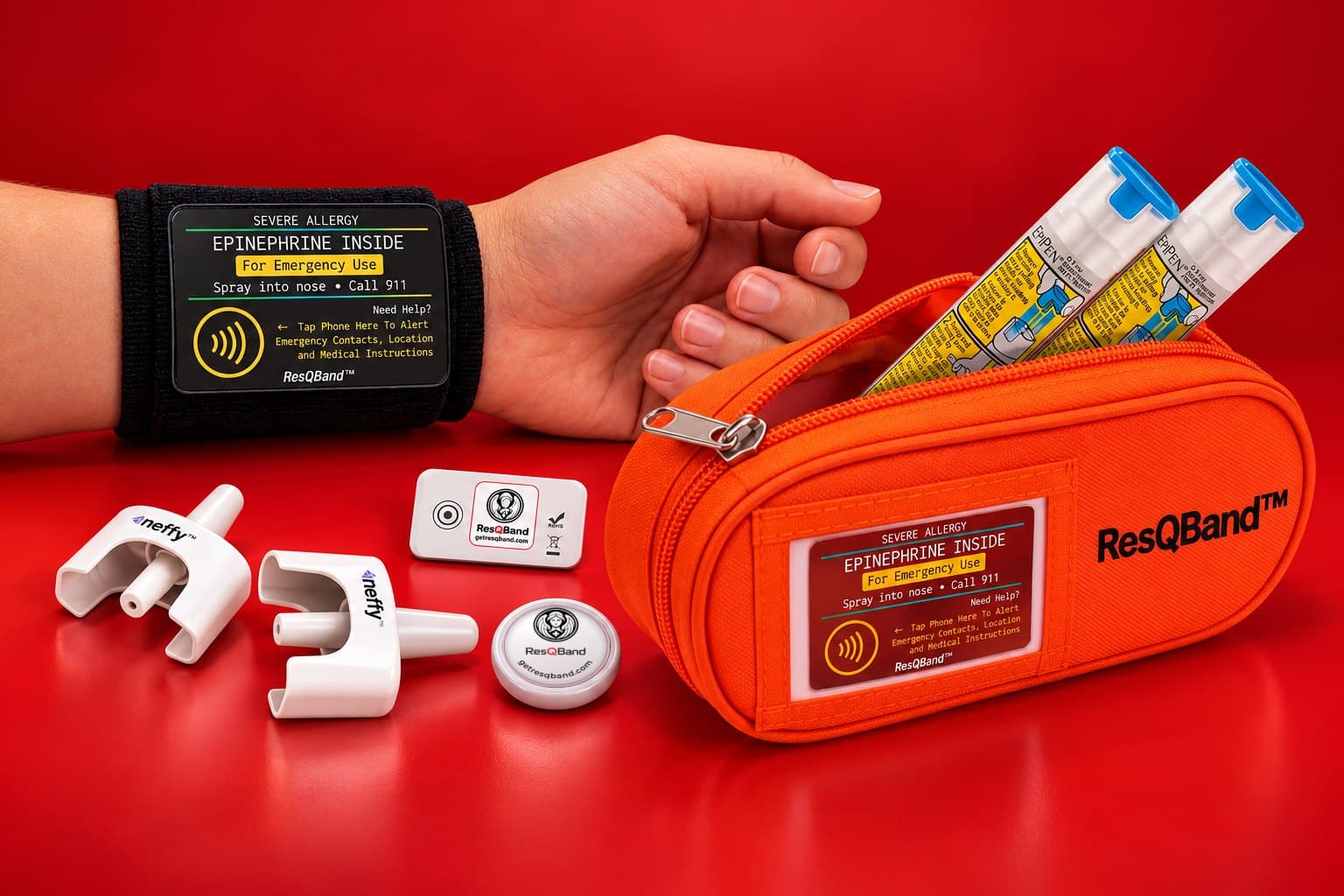
A tap on the ResQBand Tap Card opens your emergency steps and a Call 911 button on most phones, and the helper can alert your emergency contacts with one more tap. The kit adds a tracker, a temperature disc and a thermal pack for your epinephrine.
General information, not medical advice. We link to other organizations' resources; we don't control them, and a listing isn't an endorsement. Summaries marked as AI summaries are written by an AI model from the source and can miss nuance, so read the original before acting on anything. Something out of date or missing? Email info@westernallergy.com. In an emergency, use epinephrine and call 911.